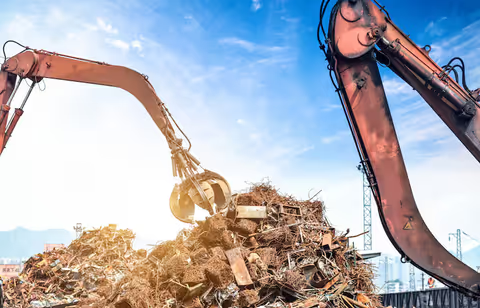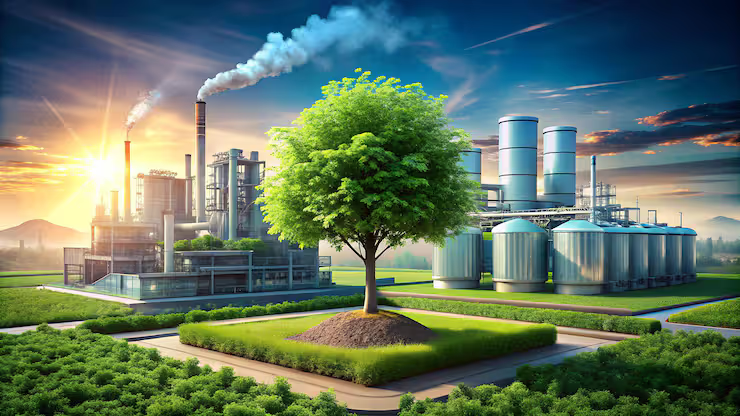
Industrial bioenergy refers to the production and use of energy derived from biological materials such as agricultural residues, forestry waste, organic waste, and dedicated energy crops. These resources are converted into fuels like bioethanol, biodiesel, biogas, and solid biomass for use in power generation, heating, and industrial processes. Unlike fossil fuels, bioenergy is considered renewable because it relies on organic matter that can be replenished over time.
This topic has gained significant attention in recent years due to growing concerns about climate change, energy security, and the need to reduce greenhouse gas emissions. Governments and industries worldwide are increasingly investing in bioenergy as part of their transition toward cleaner energy systems. Industrial bioenergy plays a key role in decarbonizing hard-to-abate sectors such as manufacturing, transportation, and heavy industries.
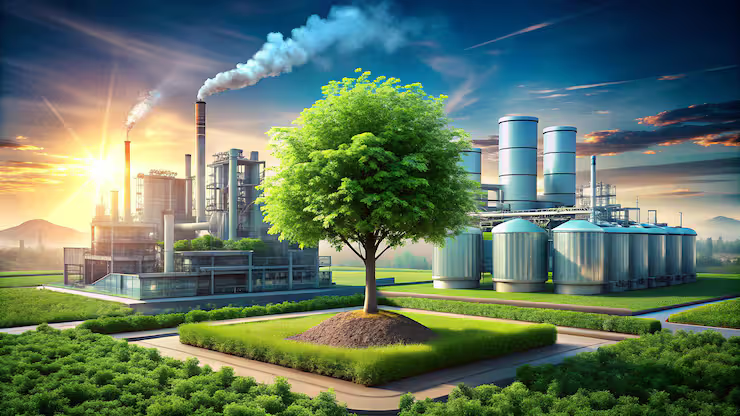
Recent trends show a rise in advanced biofuels, waste-to-energy technologies, and integration with circular economy models. With global energy demand continuing to grow, bioenergy offers a scalable and flexible solution that complements other renewable sources like solar and wind. Understanding its benefits, challenges, and applications is essential for informed decision-making.
Who It Affects and What Problems It Solves
Industrial bioenergy impacts a wide range of stakeholders, including governments, industries, farmers, energy companies, and consumers. For governments, it supports energy diversification and helps meet climate targets. Industries benefit from alternative fuel options that reduce reliance on fossil fuels. Farmers and rural communities gain new income streams through the supply of biomass feedstock.
Energy companies are also adapting by incorporating bioenergy into their portfolios, especially in regions where renewable integration is accelerating. Consumers indirectly benefit from cleaner energy systems and improved environmental outcomes.
Problems It Solves
Industrial bioenergy addresses several critical challenges:
- Waste Management: Converts agricultural, forestry, and municipal waste into useful energy, reducing landfill use.
- Carbon Emissions: Helps lower greenhouse gas emissions compared to fossil fuels, especially when sustainably sourced.
- Energy Security: Reduces dependence on imported fossil fuels by utilizing local biomass resources.
- Rural Development: Creates economic opportunities in rural areas through biomass production and processing.
- Energy Diversification: Provides a stable and dispatchable energy source that complements intermittent renewables. Recent Updates and Trends
Over the past year, industrial bioenergy has seen notable developments:
- Advanced Biofuels Growth: Technologies such as second-generation (2G) ethanol and sustainable aviation fuel (SAF) are gaining traction, particularly in aviation and heavy transport sectors.
- Policy Support Expansion: Many countries have updated renewable energy policies to include stronger incentives for bioenergy adoption.
- Carbon Capture Integration: Bioenergy with carbon capture and storage (BECCS) is emerging as a potential negative-emission solution.
- Corporate Adoption: Large corporations are increasingly investing in bioenergy to meet sustainability commitments and reduce carbon footprints.
- Supply Chain Improvements: Digital tools and logistics optimization are improving biomass collection and transportation efficiency.
These trends indicate a shift from traditional biomass use to more advanced, efficient, and sustainable bioenergy systems.
Industrial Bioenergy Types Comparison Table
| Type of Bioenergy | Feedstock Source | Key Use Case | Efficiency Level | Environmental Impact | Scalability |
|---|---|---|---|---|---|
| Bioethanol | Sugarcane, corn | Transport fuel | Moderate | Lower emissions | High |
| Biodiesel | Vegetable oils, animal fats | Diesel replacement | Moderate | Lower emissions | High |
| Biogas | Organic waste, manure | Electricity & heating | High | Very low emissions | Medium |
| Solid Biomass | Wood, crop residues | Industrial heat & power | Moderate | Depends on sourcing | High |
| Advanced Biofuels | Waste biomass, algae | Aviation & heavy transport | High | Very low emissions | Emerging |
Laws and Policies Affecting Industrial Bioenergy
Industrial bioenergy is strongly influenced by government regulations, incentives, and environmental policies. In India and many other countries, bioenergy development is supported through renewable energy targets, subsidies, and blending mandates.
For example, ethanol blending programs encourage the use of bioethanol in transportation fuels. Similarly, waste-to-energy initiatives promote the conversion of municipal and agricultural waste into energy. Environmental regulations also ensure that biomass sourcing remains sustainable and does not lead to deforestation or ecological damage.
Practical Guidance
- For Industries: Bioenergy is most suitable when there is consistent access to biomass waste or residues. Industries with high thermal energy demand (e.g., cement, steel, food processing) can benefit significantly.
- For Policymakers: Supporting infrastructure, supply chains, and research is crucial for scaling bioenergy adoption.
- For Investors: Advanced biofuels and integrated systems (like BECCS) offer long-term potential but require careful evaluation of technology maturity.
Tools and Resources
Several tools and resources can help individuals and organizations understand and implement industrial bioenergy solutions:
- Biomass Calculators: Estimate energy potential from different feedstocks
- Lifecycle Assessment (LCA) Tools: Evaluate environmental impact and carbon footprint
- Government Portals: Provide policy updates, subsidies, and compliance guidelines
- Energy Modeling Software: Helps simulate bioenergy systems and optimize performance
- Industry Reports: Offer insights into market trends, technology advancements, and investment opportunities
- Supply Chain Platforms: Assist in biomass sourcing, logistics, and vendor management
These resources support better planning, decision-making, and performance tracking in bioenergy projects.
Frequently Asked Questions (FAQ)
What is industrial bioenergy used for?
Industrial bioenergy is used for electricity generation, heating, and as a fuel for transportation and industrial processes. It is particularly useful in sectors that require continuous and high energy output.
Is bioenergy truly renewable?
Yes, bioenergy is considered renewable when biomass is sourced sustainably and replenished over time. However, unsustainable practices can reduce its environmental benefits.
How does bioenergy compare to solar and wind energy?
Bioenergy provides stable and dispatchable energy, unlike solar and wind, which are intermittent. It complements these sources rather than replacing them.
What are the main challenges of bioenergy?
Key challenges include feedstock availability, logistics, land use concerns, and initial investment costs for advanced technologies.
What is the future of industrial bioenergy?
The future lies in advanced biofuels, integration with carbon capture technologies, and increased policy support. It is expected to play a significant role in global decarbonization efforts.
Conclusion
Industrial bioenergy is a versatile and evolving energy solution that addresses multiple global challenges, including waste management, carbon reduction, and energy security. Data from recent trends shows a clear shift toward advanced technologies and integrated systems that enhance efficiency and sustainability.
While traditional bioenergy solutions remain widely used, emerging innovations such as advanced biofuels and carbon capture integration are shaping the future of the sector. However, its success depends heavily on sustainable feedstock sourcing, supportive policies, and technological advancements.
In practical terms, industrial bioenergy is best suited for regions with abundant biomass resources and industries with high energy demands. When implemented effectively, it offers a balanced approach to renewable energy—combining reliability, scalability, and environmental benefits