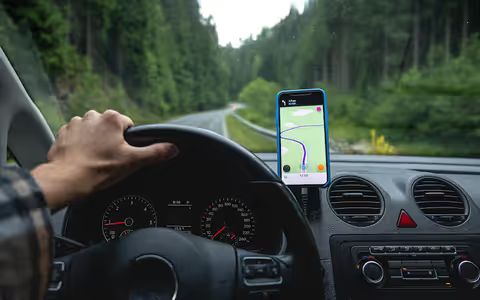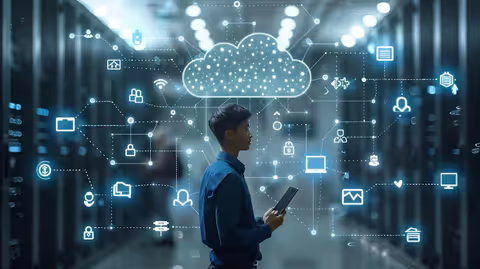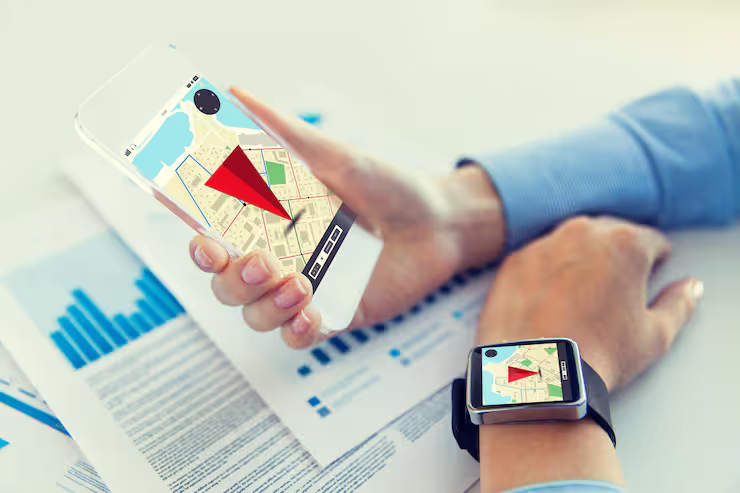
Real time tracking refers to technology that continuously monitors the location, movement, or status of objects, vehicles, people, or digital assets. It relies on technologies such as GPS tracking systems, geolocation sensors, Internet of Things (IoT) devices, and cloud-based data analytics platforms to provide live updates and precise tracking information.
This concept emerged from the need for better visibility and monitoring across industries. Early tracking solutions were primarily used for military navigation and satellite positioning systems. Over time, advancements in digital infrastructure and wireless networks transformed these systems into everyday tools for logistics management, transportation monitoring, asset tracking analytics, and safety management.
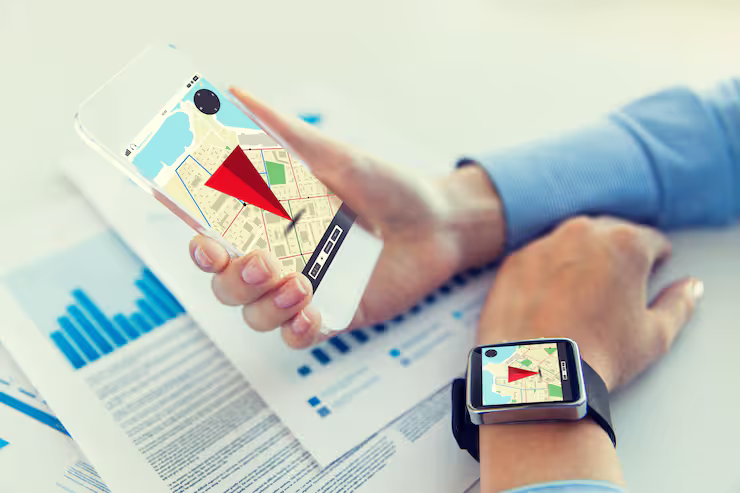
Modern tracking platforms combine several technologies including satellite positioning, mobile networks, sensor technology, and artificial intelligence analytics. These systems collect location data and process it through analytics dashboards that display movement patterns, performance metrics, and operational insights.
Common components of a real time tracking ecosystem include:
-
GPS satellites providing location coordinates
-
Tracking devices installed in vehicles or equipment
-
Cloud platforms that process geolocation data
-
Data visualization dashboards for monitoring
-
Analytics algorithms that interpret movement patterns
The result is a dynamic system capable of providing continuous location intelligence across different environments.
Why Real Time Tracking Matters in Today’s Digital Economy
Real time tracking has become an essential technology in many sectors due to increasing demand for operational transparency and efficiency. Businesses, public institutions, and individuals rely on tracking technology to monitor assets, improve logistics planning, and enhance security.
One of the most visible applications is fleet tracking software used in transportation and logistics. Companies use vehicle tracking systems to monitor delivery vehicles, optimize routes, and reduce operational inefficiencies. This allows organizations to analyze travel patterns, fuel usage trends, and driver performance metrics.
Real time tracking also plays an important role in supply chain analytics. With global trade networks becoming more complex, organizations need continuous visibility into the movement of goods. Tracking systems provide location updates and shipment monitoring that help identify delays and improve coordination between supply chain partners.
Industries benefiting from tracking technologies include:
-
Logistics and transportation – shipment monitoring and route optimization
-
Healthcare systems – tracking medical equipment and patient transport
-
Smart cities – monitoring public transportation and urban infrastructure
-
E-commerce logistics – package tracking and delivery transparency
-
Security and safety monitoring – personnel and asset protection
Another growing area is location intelligence analytics. Businesses use geolocation data to analyze customer movement patterns, optimize infrastructure planning, and enhance operational decision-making.
The importance of tracking technology continues to grow as organizations prioritize data-driven operations and digital transformation strategies.
Emerging Trends and Developments in Real Time Tracking Technology
Over the past year, several developments have reshaped the real time tracking landscape. Advances in IoT connectivity, artificial intelligence analytics, and satellite positioning technologies have improved the accuracy and scalability of tracking systems.
One major trend in 2025 has been the integration of AI-powered analytics into tracking platforms. These systems can automatically detect anomalies in movement patterns, identify potential operational issues, and generate predictive insights based on historical location data.
Another development involves low-power IoT tracking devices designed for long-term monitoring. These devices use energy-efficient communication networks such as LPWAN technologies to transmit location data while preserving battery life.
Recent technological trends include:
-
AI-driven geolocation analytics platforms
-
Satellite-based tracking expansion for remote areas
-
Edge computing integration for faster data processing
-
Blockchain-based supply chain tracking transparency
-
5G connectivity enabling faster location updates
The following table summarizes how modern tracking technologies compare across major characteristics.
| Technology Type | Typical Use Case | Data Transmission | Accuracy Level |
|---|---|---|---|
| GPS Tracking Systems | Vehicle and fleet monitoring | Satellite + cellular networks | High |
| IoT Sensor Tracking | Asset monitoring and equipment tracking | Low-power IoT networks | Medium–High |
| RFID Tracking Systems | Inventory and warehouse management | Short-range radio frequency | Medium |
| Cellular Geolocation | Mobile device tracking | Cellular network triangulation | Medium |
Data analytics platforms are also evolving to support visualization dashboards, predictive maintenance insights, and automated alerts based on real-time tracking data.
These innovations highlight the growing intersection between tracking technology, cloud computing infrastructure, and advanced data analytics.
Regulatory Considerations and Policy Frameworks
Real time tracking technologies operate within legal frameworks designed to protect privacy, security, and responsible data use. Governments and regulatory bodies establish rules governing how location data can be collected, processed, and stored.
In India, digital tracking technologies are influenced by several regulatory initiatives focused on data protection and digital infrastructure governance. The Digital Personal Data Protection Act (DPDP Act) introduced stronger safeguards for personal data processing, including location information collected by digital platforms.
Tracking technologies must comply with regulations related to:
-
personal data privacy
-
data security standards
-
consent for location data processing
-
secure storage and transfer of tracking information
In transportation sectors, government programs have also encouraged tracking technology adoption. For example, public transportation monitoring initiatives promote vehicle tracking systems to improve safety and operational oversight.
Some regulatory considerations include:
| Policy Area | Regulatory Objective | Impact on Tracking Technology |
|---|---|---|
| Data Privacy Laws | Protection of personal location data | Requires consent and transparency |
| Transport Monitoring Policies | Improve public transport oversight | Encourages GPS installation |
| Digital Infrastructure Programs | Strengthen national technology frameworks | Supports IoT and data platforms |
| Cybersecurity Guidelines | Prevent unauthorized data access | Requires secure tracking systems |
Organizations implementing tracking systems must ensure that their technology infrastructure aligns with these policies and safeguards user data appropriately.
Tools and Resources Supporting Real Time Tracking Systems
A wide range of software platforms, analytics dashboards, and geolocation technologies support modern tracking solutions. These tools help organizations analyze movement data, visualize location information, and generate operational insights.
Many platforms combine tracking hardware with cloud-based monitoring dashboards that display real time data streams.
Examples of commonly used tracking and location intelligence tools include:
-
Google Maps Platform – geolocation APIs and mapping visualization tools
-
OpenStreetMap – open geographic data for mapping applications
-
Fleet management analytics platforms – vehicle monitoring dashboards
-
IoT device management systems – connectivity monitoring for tracking sensors
-
Geospatial analytics software – spatial data visualization and pattern analysis
Tracking systems often rely on specialized technologies such as:
-
satellite positioning modules
-
cellular communication networks
-
geofencing algorithms
-
route optimization analytics
Below is an example of how a tracking data flow typically works.
| Step | Tracking Process | Data Output |
|---|---|---|
| Device Location Capture | GPS device records coordinates | Latitude and longitude |
| Data Transmission | Device sends data to cloud platform | Real-time data stream |
| Processing and Analytics | Software processes geolocation data | Movement patterns |
| Dashboard Visualization | Analytics interface displays results | Maps, charts, alerts |
These tools enable organizations to transform raw location data into meaningful operational intelligence.
Frequently Asked Questions About Real Time Tracking Technology
What is a real time tracking system?
A real time tracking system is a technology platform that continuously monitors the location or status of objects, vehicles, or individuals using GPS sensors, IoT devices, and cloud-based analytics tools.
How accurate is GPS tracking technology?
Modern GPS tracking systems can typically achieve location accuracy within a few meters when satellite signals and network connectivity are strong. Accuracy may vary depending on environmental factors and device capabilities.
What industries commonly use real time tracking?
Industries that frequently rely on tracking systems include logistics, transportation, supply chain management, healthcare infrastructure monitoring, public transportation, and smart city management.
What technologies power real time tracking platforms?
Most tracking platforms use a combination of GPS satellites, IoT sensors, wireless communication networks, cloud computing platforms, and geospatial data analytics software.
Is location tracking regulated by privacy laws?
Yes. Many countries have implemented data protection regulations that govern how location data can be collected and processed. Organizations must comply with privacy frameworks and ensure responsible handling of tracking information.
Conclusion
Real time tracking technology has become a cornerstone of modern digital infrastructure. By combining satellite positioning, IoT connectivity, and advanced analytics platforms, organizations can monitor assets, analyze movement patterns, and improve operational efficiency.
The growing adoption of tracking systems across logistics, transportation, healthcare, and urban infrastructure highlights the importance of location intelligence in data-driven decision-making. At the same time, regulatory frameworks emphasize the responsible use of geolocation data to protect privacy and ensure secure digital environments.
As innovations such as AI analytics, low-power IoT tracking devices, and advanced connectivity networks continue to evolve, real time tracking systems are expected to become even more sophisticated. These technologies will further enhance visibility, improve operational insights, and support the development of smarter and more connected digital ecosystems.