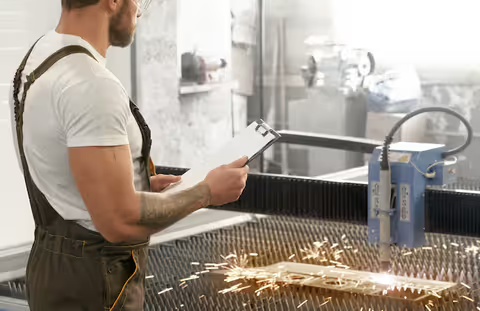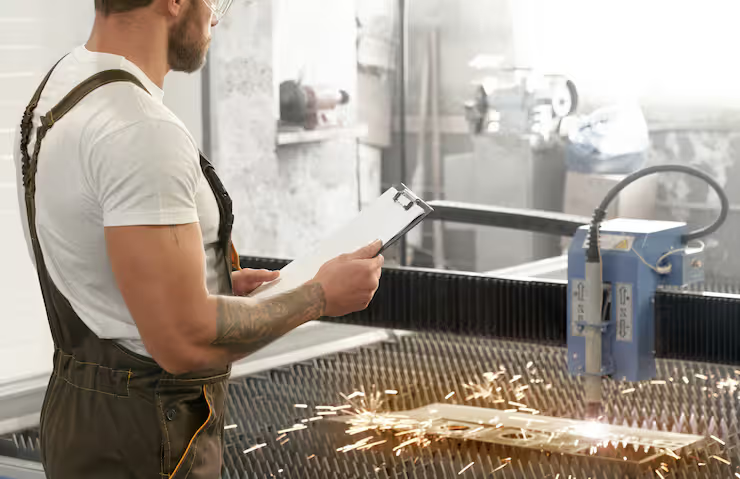
Laser cutting machines are advanced manufacturing tools that use a focused beam of light (laser) to cut, engrave, or shape materials with high precision. These machines are widely used across industries such as automotive, aerospace, electronics, and even small-scale fabrication workshops. The core advantage lies in their ability to produce clean cuts with minimal material waste and reduced need for secondary finishing processes.
In recent years, the comparison of different laser cutting machines has become increasingly important due to rapid technological advancements and wider accessibility. Businesses and individuals now have options ranging from compact desktop machines to industrial-grade systems. Key differences exist in laser types (CO₂, fiber, diode), power levels, efficiency, and operational costs.
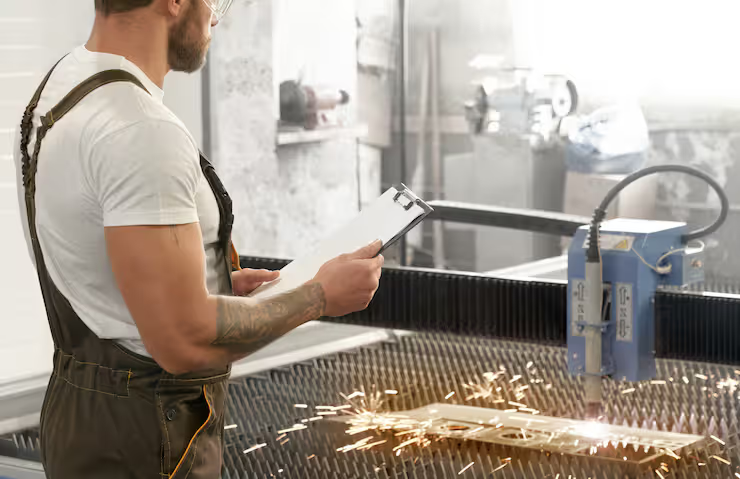
Recent trends show a shift toward automation, integration with smart manufacturing systems, and improved energy efficiency. With Industry 4.0 gaining traction, laser cutting machines are becoming more connected, data-driven, and adaptable. Understanding these differences helps users select the right machine based on application, budget, and long-term productivity goals.
Who It Affects and What Problems It Solves
Laser cutting machines impact a broad range of users—from large manufacturing companies to small businesses, startups, hobbyists, and educational institutions. Industries like metal fabrication, signage, jewelry design, and packaging rely heavily on these machines for precision and speed. Even educational labs and makerspaces use entry-level laser cutters for prototyping and learning purposes.
For manufacturers, choosing the right laser cutting technology directly affects production efficiency, cost control, and product quality. For small businesses, it determines scalability and competitiveness. Engineers and designers benefit from the flexibility to create complex geometries that would be difficult or impossible with traditional cutting methods.
Problems It Solves
- Precision limitations: Traditional cutting methods often lack the fine accuracy required for intricate designs.
- Material waste: Laser cutting minimizes waste through precise cutting paths.
- Time inefficiency: Faster cutting speeds improve productivity.
- Tool wear and maintenance: Unlike mechanical tools, lasers reduce physical wear and tear.
- Complex design constraints: Enables cutting of detailed and customized patterns.
Recent Updates and Industry Trends
The laser cutting industry has seen notable developments over the past year, driven by advancements in automation and sustainability:
- Increased adoption of fiber lasers: Fiber laser machines continue to dominate metal cutting applications due to their higher efficiency and lower maintenance compared to CO₂ lasers.
- AI and automation integration: Many modern machines now include AI-based optimization for cutting paths, improving speed and reducing waste.
- Energy efficiency improvements: Manufacturers are focusing on reducing power consumption, aligning with global sustainability goals.
- Compact and affordable models: Entry-level machines are becoming more accessible, allowing small businesses to adopt laser technology.
- Cloud-based monitoring: Remote monitoring and diagnostics are becoming standard features in industrial systems.
These trends indicate a shift toward smarter, more efficient, and user-friendly laser cutting solutions.
Comparison Table of Laser Cutting Machines
| Feature | CO₂ Laser Machines | Fiber Laser Machines | Diode Laser Machines |
|---|---|---|---|
| Best For | Non-metals (wood, acrylic) | Metals (steel, aluminum) | Light materials, engraving |
| Efficiency | Moderate | High | Low to moderate |
| Maintenance | Higher (mirrors, gas) | Low | Very low |
| Initial Cost | Moderate | High | Low |
| Operating Cost | Moderate | Low | Very low |
| Cutting Speed | Medium | Very high | Low |
| Precision | High | Very high | Moderate |
| Lifespan | Moderate | Long | Short to moderate |
| Power Range | 40W–150W+ | 500W–6000W+ | 5W–20W |
| Common Applications | Signage, crafts | Industrial metal cutting | Hobby projects, engraving |
Laws and Policies Affecting Laser Cutting Machines
Laser cutting machines are subject to various safety regulations, environmental standards, and industrial compliance requirements, particularly in countries like India and globally.
Key Regulatory Areas
- Workplace Safety Standards: Operators must follow guidelines related to laser radiation exposure, protective equipment, and machine handling.
- Electrical and Industrial Safety: Machines must comply with electrical safety norms and proper installation practices.
- Environmental Regulations: Emissions from cutting processes (especially with certain materials) must meet pollution control standards.
- Import and Certification Rules: Imported machines often require certification to ensure they meet national safety and quality benchmarks.
Practical Guidance
- Small workshops: Entry-level diode or CO₂ machines may be sufficient, but proper ventilation and safety measures are essential.
- Industrial units: Fiber laser machines are preferred for compliance with efficiency and productivity standards.
- Educational institutions: Low-power machines are recommended to ensure safety and ease of use.
Adhering to regulations not only ensures safety but also improves operational reliability and long-term sustainability.
Tools and Resources
Several tools and resources can help users better understand, operate, and optimize laser cutting machines:
Software Tools
- CAD Software (AutoCAD, SolidWorks): Used for designing cutting patterns.
- CAM Software: Converts designs into machine-readable instructions.
- Laser Control Software (LightBurn, RDWorks): Manages machine operations and settings.
Online Resources
- Manufacturer documentation and user manuals
- Online forums and communities for troubleshooting
- Video tutorials for beginners and advanced users
Calculators and Templates
- Material thickness vs. power calculators
- Cost estimation templates for production planning
- Maintenance schedules and checklists
Monitoring Tools
- IoT-based dashboards for machine performance
- Predictive maintenance tools for industrial systems
These resources help users maximize efficiency, reduce errors, and improve overall productivity.
Frequently Asked Questions (FAQ)
What is the main difference between CO₂ and fiber laser cutting machines?
CO₂ lasers are better suited for non-metal materials like wood and acrylic, while fiber lasers are optimized for cutting metals with higher speed and efficiency.
Are laser cutting machines suitable for small businesses?
Yes, entry-level machines, especially diode and small CO₂ systems, are increasingly affordable and suitable for small-scale operations.
How much maintenance do laser cutting machines require?
Maintenance varies by type. Fiber lasers require minimal maintenance, while CO₂ machines need regular alignment and component replacement.
Is laser cutting environmentally friendly?
Laser cutting can be efficient and produce less waste, but environmental impact depends on material type and emission control measures.
What factors should be considered when choosing a laser cutting machine?
Key factors include material type, budget, power requirements, production volume, and long-term operating costs.
Conclusion
Laser cutting machines have evolved into essential tools across multiple industries due to their precision, efficiency, and adaptability. Data from industry adoption trends shows a clear shift toward fiber laser technology for industrial applications, while CO₂ and diode lasers remain relevant for specialized and smaller-scale uses.
From a comparative perspective, fiber lasers offer the best performance for metal cutting with lower operational costs over time, despite higher initial investment. CO₂ lasers provide versatility for non-metal applications, while diode lasers serve as cost-effective entry points for beginners.
The right choice ultimately depends on the intended application, budget constraints, and production requirements. For high-volume industrial use, fiber lasers are generally the most efficient option. For creative or small-scale work, CO₂ or diode machines provide practical solutions.