Electric vehicle testing refers to the structured evaluation of electric mobility systems to ensure safety, reliability, performance, and regulatory compliance. As transportation shifts toward electrification, testing frameworks have become essential to verify that electric vehicles perform correctly under different environmental and operational conditions.
Electric vehicle testing examines several components, including batteries, power electronics, charging systems, electric motors, thermal management systems, and control software. These evaluations help engineers confirm that vehicles meet safety standards and function efficiently during real-world driving conditions.

Key testing domains within electric mobility include:
-
EV battery durability and safety testing
-
Electric drivetrain performance evaluation
-
Charging infrastructure compatibility testing
-
Vehicle range and energy efficiency validation
-
Environmental stress testing for temperature and humidity
-
Software validation for battery management systems
These tests are conducted in laboratories, simulation environments, and real-world driving scenarios to validate vehicle functionality before market deployment.
| EV Testing Category | Primary Objective | Example Metrics |
|---|---|---|
| Battery Testing | Safety and lifecycle validation | Charge cycles, thermal stability |
| Powertrain Testing | Motor and inverter performance | Torque, efficiency |
| Charging Testing | Charging compatibility | Charging speed, voltage stability |
| Environmental Testing | Climate resilience | Heat tolerance, humidity resistance |
| Software Testing | System reliability | Algorithm accuracy |
Electric vehicle testing ensures technological reliability while supporting sustainable mobility initiatives worldwide.
Why Electric Vehicle Testing Matters
The rapid growth of the electric vehicle ecosystem has made testing protocols more important than ever. Governments, manufacturers, and infrastructure developers rely on accurate testing frameworks to validate safety, energy efficiency, and regulatory compliance.
Electric vehicles differ from traditional combustion-engine vehicles because they rely heavily on battery technology, advanced electronics, and software-controlled systems. This complexity requires highly specialized testing procedures.
Major stakeholders impacted by EV testing include:
-
Electric vehicle manufacturers
-
Battery technology developers
-
Charging infrastructure providers
-
Automotive safety regulators
-
Energy grid planners
-
Environmental policy organizations
Key challenges that EV testing helps address include:
-
Battery overheating risks and thermal runaway prevention
-
Charging compatibility between vehicles and infrastructure
-
Range prediction accuracy under varying driving conditions
-
Electrical system stability and electromagnetic compatibility
-
Lifecycle sustainability and battery degradation tracking
The reliability of EV technology is directly linked to rigorous testing protocols. Without standardized testing, electric mobility adoption could face safety concerns, infrastructure mismatches, or performance inconsistencies.
A simplified EV testing workflow illustrates the complexity of validation:
| Stage | Testing Focus | Outcome |
|---|---|---|
| Prototype Testing | Initial system evaluation | Engineering improvements |
| Component Testing | Battery, motor, inverter checks | Safety verification |
| Simulation Testing | Virtual performance analysis | Efficiency optimization |
| Field Testing | Real-world driving conditions | Performance validation |
| Certification Testing | Regulatory compliance | Market approval |
Through these stages, engineers refine electric vehicle designs and ensure dependable performance in everyday driving scenarios.
Recent Developments in Electric Vehicle Testing
Electric mobility has experienced major technological progress during the past year. Testing methodologies have evolved rapidly to accommodate new battery chemistries, advanced charging technologies, and intelligent vehicle software systems.
Several industry developments have influenced electric vehicle testing frameworks.
Advanced battery validation technologies (2025)
Battery testing laboratories increasingly use digital twin simulations and AI-driven diagnostics to predict battery degradation patterns. These technologies allow engineers to simulate years of battery usage within a compressed timeframe.
Ultra-fast charging compatibility testing (2024–2025)
The expansion of high-power charging networks has introduced testing requirements for ultra-fast charging systems exceeding 350 kW. Testing ensures electrical stability, connector reliability, and thermal management during high-power charging events.
Solid-state battery research testing
Automotive research institutions are intensifying testing of solid-state battery prototypes. These batteries promise higher energy density and improved safety, requiring specialized test procedures for material stability and charge cycles.
Vehicle-to-grid integration validation
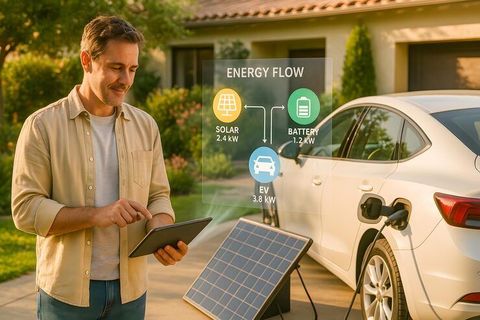
Vehicle-to-grid (V2G) technology enables electric vehicles to interact with energy grids by returning stored electricity during peak demand. Testing procedures now evaluate grid stability, bidirectional charging, and power flow management.
The following chart conceptually illustrates evolving EV testing focus areas:
| Technology Trend | Testing Requirement | Impact |
|---|---|---|
| Ultra-Fast Charging | Thermal and electrical validation | Charging efficiency |
| Solid-State Batteries | Material durability testing | Energy density improvements |
| Vehicle-to-Grid Systems | Grid interaction testing | Energy flexibility |
| AI-Based Diagnostics | Predictive battery analysis | Reliability enhancement |
These innovations demonstrate how EV testing continues to evolve alongside advancements in electric mobility technologies.
Laws and Policies Influencing EV Testing
Electric vehicle testing is closely linked to regulatory frameworks that ensure safety, environmental sustainability, and infrastructure compatibility. Many governments have introduced certification standards for electric vehicles and charging systems.
In India, electric vehicle testing and certification are influenced by national automotive regulations and energy policies.
Important policy frameworks include:
-
Automotive Industry Standards (AIS) for EV safety validation
-
Battery safety certification protocols for lithium-ion energy storage
-
Electric vehicle homologation requirements for road approval
-
Charging infrastructure standards for interoperability
-
Energy efficiency compliance guidelines
Regulatory authorities require manufacturers to conduct extensive testing before electric vehicles receive certification for public road usage.
Key compliance categories often include:
-
Electrical safety testing
-
Crash safety validation
-
Battery abuse testing (thermal, mechanical, electrical)
-
Electromagnetic compatibility testing
-
Charging system certification
Government initiatives supporting electric mobility also emphasize testing and standardization to ensure safe adoption of electric transportation technologies.
As the EV ecosystem grows, regulatory frameworks continue evolving to address emerging technologies such as autonomous driving systems, connected vehicles, and smart charging networks.
Tools and Resources for Electric Vehicle Testing
Electric vehicle engineers rely on advanced tools, digital platforms, and testing systems to analyze vehicle performance and safety. These tools help simulate operating conditions, monitor battery behavior, and evaluate electrical systems.
Common EV testing tools and resources include:
Battery testing platforms
-
Battery cycle analyzers
-
Thermal stability testing chambers
-
Battery management system diagnostic tools
Simulation and modeling software
-
Electric powertrain simulation platforms
-
Vehicle energy consumption modeling tools
-
Battery degradation prediction software
Charging infrastructure testing systems
-
EV charging protocol analyzers
-
Power quality monitoring devices
-
Smart grid integration simulation platforms
Data analytics and diagnostic tools
-
Electric vehicle telemetry monitoring systems
-
Predictive maintenance algorithms
-
EV performance data visualization dashboards
The following table highlights commonly used testing technologies.
| Tool Category | Application | Testing Function |
|---|---|---|
| Battery Analyzer | Battery lifecycle analysis | Charge and discharge cycles |
| Thermal Chamber | Environmental simulation | Heat and cold resistance |
| EV Powertrain Simulator | Motor and inverter testing | Performance validation |
| Charging Protocol Analyzer | Charging compatibility | Communication testing |
| Telemetry Systems | Vehicle data monitoring | Real-time diagnostics |
These tools enable researchers and engineers to evaluate electric vehicle components under controlled laboratory environments and dynamic real-world conditions.
Frequently Asked Questions
What is electric vehicle testing?
Electric vehicle testing is the process of evaluating EV components and systems to ensure safety, performance reliability, energy efficiency, and compliance with regulatory standards.
Why is battery testing critical for electric vehicles?
Battery systems are the core energy source of electric vehicles. Testing ensures thermal stability, lifecycle durability, and protection against electrical faults or overheating.
How is EV range tested?
Range testing measures how far an electric vehicle can travel on a single charge. Testing occurs under standardized driving cycles and real-world driving conditions.
What is charging compatibility testing?
Charging compatibility testing verifies that electric vehicles can safely interact with different charging stations and power levels while maintaining electrical stability.
How do governments regulate EV testing?
Governments establish automotive safety standards, battery certification protocols, and charging infrastructure guidelines that manufacturers must follow before vehicles receive approval for road use.
Conclusion
Electric vehicle testing plays a critical role in advancing the reliability and safety of electric mobility technologies. As the transportation sector transitions toward electrification, testing frameworks ensure that vehicles perform efficiently, interact safely with charging infrastructure, and meet regulatory standards.
Modern EV testing extends beyond mechanical evaluation. It now includes advanced battery diagnostics, power electronics validation, software reliability testing, and energy grid integration analysis.
With continuous technological innovation in battery chemistry, fast charging, and smart mobility systems, testing methodologies will remain central to the evolution of electric transportation. Rigorous testing not only protects consumers and infrastructure but also supports the long-term development of sustainable and intelligent mobility ecosystems.