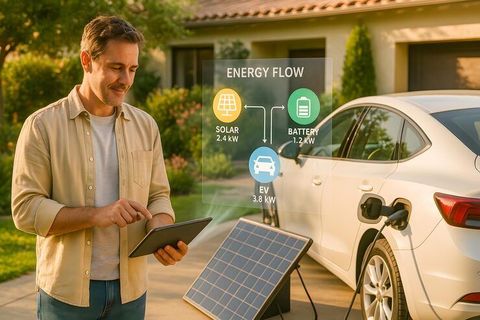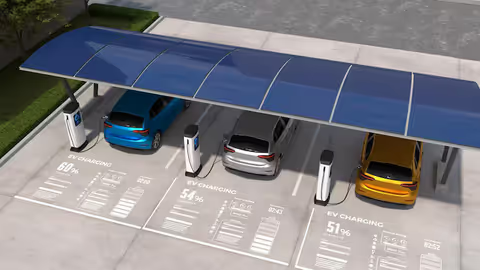
Electric Vehicle (EV) management refers to the systems, strategies, and technologies used to monitor, operate, maintain, and optimize electric vehicles and their supporting infrastructure. This includes battery management, charging systems, fleet monitoring, energy consumption tracking, and software integration. As EV adoption grows globally, effective management has become a critical component of sustainable transportation.
In recent years, the shift toward electrification has accelerated due to environmental concerns, stricter emission norms, and advancements in battery technology. Governments and private sectors are investing heavily in EV ecosystems, making management solutions more sophisticated and data-driven. This comparison matters today because individuals, businesses, and policymakers must understand how EV management systems differ in efficiency, scalability, and usability.

Key trends include smart charging, AI-based fleet analytics, vehicle-to-grid (V2G) integration, and cloud-based monitoring platforms. These innovations not only improve operational efficiency but also reduce costs and environmental impact. As EV adoption continues to expand, understanding management approaches becomes essential for making informed decisions.
Who It Affects and What Problems It Solves
Electric vehicle management impacts a wide range of stakeholders, including individual EV owners, fleet operators, logistics companies, urban planners, and government agencies. For private users, EV management ensures efficient battery usage, cost savings, and improved vehicle lifespan. For businesses, especially those managing fleets, it enables better route planning, energy optimization, and reduced operational expenses.
Fleet operators, in particular, benefit significantly from centralized EV management systems. These systems provide real-time insights into vehicle performance, charging status, and energy consumption. This helps reduce downtime and improve overall productivity. Similarly, governments and municipalities rely on EV management tools to plan infrastructure, monitor emissions, and support sustainability goals.
Problems It Solves
- Range Anxiety: Provides accurate battery and route data to reduce uncertainty
- Charging Inefficiency: Optimizes charging schedules and locations
- High Operational Costs: Reduces energy consumption through smart analytics
- Maintenance Challenges: Enables predictive maintenance using data insights
- Infrastructure Gaps: Helps plan and manage charging networks effectively
Recent Updates and Trends
Over the past year, EV management has seen notable advancements driven by technology and policy changes:
- Smart Charging Expansion: More charging stations now support dynamic load balancing, allowing multiple vehicles to charge efficiently without overloading the grid.
- AI Integration: Machine learning models are being used to predict battery degradation and optimize charging cycles.
- Vehicle-to-Grid (V2G): Pilot projects have expanded, allowing EVs to return energy to the grid during peak demand.
- Battery Swapping Models: Gaining traction in urban areas, especially for commercial fleets and two-wheelers.
- Software-Defined Vehicles: EVs are increasingly managed through over-the-air (OTA) updates, improving performance without physical intervention.
- Standardization Efforts: Governments and organizations are working toward universal charging standards to improve interoperability.
These developments highlight a shift toward more intelligent, connected, and scalable EV ecosystems.
Comparison Table: Key Aspects of EV Management Systems
| Feature | Basic EV Management | Advanced EV Management System |
|---|---|---|
| Monitoring Capability | Limited (manual checks) | Real-time tracking & analytics |
| Charging Optimization | Fixed schedules | Dynamic, AI-based scheduling |
| Battery Health Management | Basic alerts | Predictive diagnostics |
| Integration | Standalone systems | Cloud-based & IoT integrated |
| Cost Efficiency | Moderate | High (optimized energy use) |
| Scalability | Limited | Highly scalable for fleets |
| User Interface | Simple dashboards | Advanced, data-driven UI |
| Maintenance Approach | Reactive | Predictive & automated |
Laws and Policies Impacting EV Management
Electric vehicle management is closely influenced by government regulations, incentives, and environmental policies. In India, several initiatives have shaped the EV landscape:
- FAME II Scheme (Faster Adoption and Manufacturing of Electric Vehicles): Provides subsidies for EV adoption and charging infrastructure development.
- State EV Policies: Different states offer incentives such as tax exemptions, registration fee waivers, and infrastructure support.
- Battery Recycling Rules: Regulations now require proper disposal and recycling of EV batteries to reduce environmental impact.
- Charging Infrastructure Guidelines: Standards have been introduced to ensure safety, interoperability, and accessibility of charging stations.
Practical Guidance
- For Individuals: Choose EVs compatible with widely available charging standards to avoid inconvenience
- For Businesses: Invest in scalable EV management systems that comply with government policies and reporting requirements
- For Fleet Operators: Align charging infrastructure with local regulations to benefit from subsidies and incentives
Tools and Resources for EV Management
A variety of tools and platforms are available to support effective EV management:
Software Platforms
- Fleet management dashboards for real-time tracking
- Energy consumption analytics tools
- Cloud-based EV monitoring systems
Mobile Apps
- Charging station locator apps
- Battery health monitoring apps
- Route optimization tools
Calculators and Websites
- EV cost comparison calculators
- Charging time estimators
- Government portals for subsidies and policy updates
Templates and Services
- Fleet performance tracking templates
- Maintenance scheduling tools
- Infrastructure planning services
These resources help users make informed decisions and improve efficiency in EV operations.
Frequently Asked Questions (FAQ)
What is electric vehicle management?
Electric vehicle management involves monitoring and optimizing EV performance, charging, and maintenance using software and data-driven tools.
Why is EV management important?
It improves efficiency, reduces costs, and ensures better battery health and vehicle performance over time.
How does EV management reduce costs?
By optimizing charging schedules, reducing energy waste, and enabling predictive maintenance, it lowers operational expenses.
What are the key components of EV management?
Battery management systems, charging infrastructure, fleet monitoring tools, and data analytics platforms.
Are EV management systems suitable for small businesses?
Yes, many scalable solutions are designed to meet the needs of both small and large operations.
Conclusion
Electric vehicle management plays a crucial role in maximizing the efficiency and sustainability of EV adoption. Data-driven systems, AI-powered analytics, and smart charging solutions are transforming how vehicles are monitored and operated. Compared to basic systems, advanced EV management platforms offer significantly higher efficiency, scalability, and cost savings.
Recent trends indicate a clear shift toward integrated, cloud-based solutions that provide real-time insights and predictive capabilities. Policies and government initiatives further support this transition, making EV management more accessible and standardized.
From a practical standpoint, individuals benefit from improved usability and reduced running costs, while businesses gain operational efficiency and scalability. Based on current data and trends, adopting advanced EV management systems is a more effective approach for long-term sustainability and performance optimization.