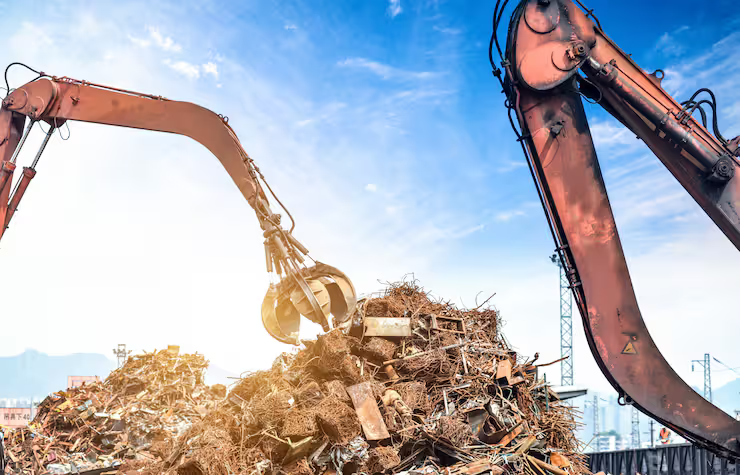
Industrial shredding is a mechanical process used to break down large materials into smaller, manageable pieces. It is widely used in waste management, recycling systems, manufacturing operations, and data destruction industries. Industrial shredders use powerful rotating blades, cutters, or shafts to reduce the size of materials such as plastics, metals, paper, rubber, wood, and electronic waste.
Material size reduction is a core function in modern industrial waste processing and recycling infrastructure. By converting bulky materials into smaller fragments, shredding systems make it easier to transport, sort, recycle, or reuse materials. Industrial shredding equipment is often integrated into larger waste processing systems, recycling technology infrastructure, and industrial automation workflows.
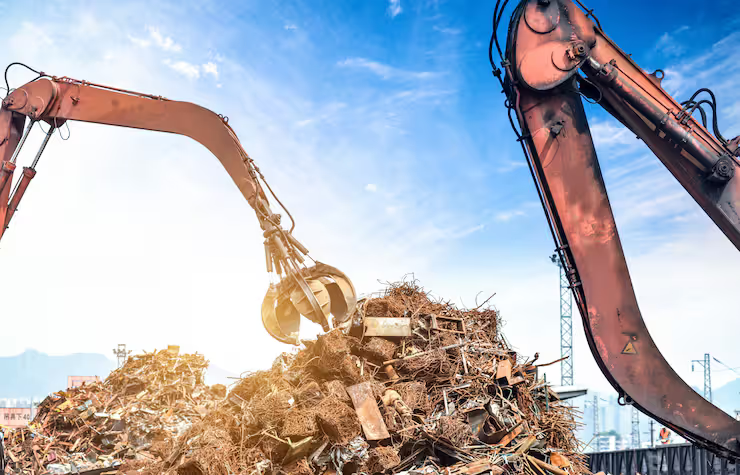
Industries such as manufacturing, logistics, automotive production, paper processing, and electronic recycling rely heavily on shredding technology. In addition to waste reduction, shredding improves operational efficiency by preparing materials for downstream processing like granulation, compaction, or energy recovery.
Understanding Industrial Shredding Systems
Industrial shredders come in several configurations depending on the material type and processing requirements.
| Shredder Type | Key Function | Typical Materials |
|---|---|---|
| Single-Shaft Shredder | Controlled material reduction | Plastic waste, packaging materials |
| Dual-Shaft Shredder | Heavy-duty bulk material shredding | Tires, metals, industrial scrap |
| Four-Shaft Shredder | Precise particle size control | Electronic waste, confidential materials |
| Hammermill Shredder | Impact-based size reduction | Aluminum, scrap metals |
Industrial shredding systems are designed for durability, continuous operation, and high torque output. These machines often include features such as automated feeding systems, smart sensors, and programmable logic controllers to maintain optimal performance.
Why Industrial Shredding Matters in Modern Industry
Industrial shredding plays a significant role in global waste management and recycling technology ecosystems. As industrial production grows, managing large volumes of materials responsibly becomes more important.
Key reasons industrial shredding is widely adopted include:
• Efficient waste reduction technology for large-scale manufacturing
• Improved recycling efficiency for plastics, metals, and paper materials
• Secure destruction of sensitive documents and digital storage devices
• Preparation of materials for energy recovery systems
• Reduction of landfill waste and improved environmental sustainability
Shredding also supports circular economy initiatives. By breaking down materials into reusable fragments, industries can reintegrate recycled raw materials into production cycles.
Industries that rely heavily on shredding processes include:
• Automotive manufacturing
• Electronics recycling and e-waste management
• Packaging and paper processing
• Construction and demolition recycling
• Municipal solid waste management
The increased focus on sustainable manufacturing practices has further strengthened the importance of industrial shredding technologies worldwide.
Industrial Shredding Technology Trends
The past year has seen several technological advancements and industry developments in shredding systems and recycling infrastructure.
Recent industry trends include:
• AI-driven sorting integration (2025)
Modern recycling facilities increasingly integrate artificial intelligence with shredding lines to identify and separate materials after size reduction.
• Smart industrial automation systems (2024–2025)
Advanced sensors and monitoring software now track machine temperature, vibration, and load levels, improving equipment lifespan and efficiency.
• Energy-efficient shredding motors
New high-efficiency motors and torque control systems reduce energy consumption in heavy-duty shredders.
• E-waste recycling expansion
Global growth in electronics recycling has increased demand for shredders capable of handling circuit boards, lithium batteries, and data storage devices.
• Advanced data destruction compliance
Data security regulations have increased the use of high-security shredding solutions for storage media such as hard drives and SSDs.
A simplified view of industrial shredding workflow:
These developments highlight how shredding technology is evolving alongside digital monitoring systems and environmental regulations.
Regulations and Compliance in Industrial Shredding
Industrial shredding operations are influenced by environmental regulations, waste management policies, and data protection laws. Compliance ensures that shredding activities meet safety standards and environmental responsibilities.
Important regulatory frameworks affecting shredding operations include:
• Waste Management Regulations
Many countries require industrial facilities to follow strict waste handling and recycling rules to minimize landfill impact.
• Electronic Waste Directives
E-waste regulations govern how electronic components are processed, recycled, and disposed of.
• Data Protection and Information Security Laws
Secure shredding of sensitive documents and storage media supports compliance with data privacy regulations.
• Environmental Emission Standards
Shredding facilities must manage noise levels, dust emissions, and air pollution under industrial environmental policies.
Government programs often promote recycling initiatives, encouraging industries to adopt advanced waste processing systems and material recovery technologies.
Compliance not only ensures legal operation but also helps organizations improve environmental sustainability and corporate responsibility.
Useful Tools and Resources for Industrial Shredding Knowledge
Industrial professionals, environmental researchers, and recycling engineers use various digital tools and resources to understand shredding processes and optimize operations.
Commonly used resources include:
• Material size reduction calculators
Used to estimate particle size outcomes and throughput capacity.
• Industrial equipment monitoring software
Helps track machine performance, maintenance schedules, and operational data.
• Waste management reporting platforms
Used to monitor recycling rates and material recovery efficiency.
• Environmental impact assessment tools
Analyze how industrial processes affect emissions, energy usage, and sustainability metrics.
• Engineering simulation software
Allows manufacturers to model shredder blade geometry, torque distribution, and mechanical stress.
Helpful resource categories include:
| Resource Type | Purpose |
|---|---|
| Engineering Simulation Software | Equipment design and performance analysis |
| Waste Tracking Platforms | Recycling metrics and reporting |
| Industrial Automation Dashboards | Machine monitoring and diagnostics |
| Environmental Compliance Tools | Regulatory documentation and reporting |
These tools support data-driven decision making in modern industrial recycling systems.
Frequently Asked Questions About Industrial Shredding
What materials can industrial shredders process?
Industrial shredders can process a wide range of materials including plastics, metals, paper, cardboard, tires, rubber, electronic waste, wood, and construction debris. The shredder design and blade configuration determine which materials can be processed efficiently.
How does industrial shredding support recycling systems?
Shredding reduces large materials into smaller fragments that can be sorted, cleaned, and reprocessed into raw materials. This improves recycling efficiency and enables material recovery for manufacturing reuse.
What is the difference between shredding and grinding?
Shredding typically involves tearing or cutting materials using rotating blades, while grinding uses abrasion or compression to create finer particles. Shredding is usually the first step in material size reduction.
Why is secure shredding important for data protection?
Secure shredding ensures that confidential documents, storage drives, and sensitive information cannot be reconstructed. It supports compliance with data protection regulations and information security standards.
What industries rely most on industrial shredding technology?
Industries that frequently use shredding include recycling operations, automotive manufacturing, electronic waste processing, packaging production, construction waste management, and municipal waste facilities.
Conclusion
Industrial shredding technology plays a foundational role in modern waste processing, recycling systems, and manufacturing operations. By reducing the size of bulky materials, shredding enables efficient transportation, sorting, and material recovery.
As industries focus more on sustainability, recycling infrastructure, and environmental responsibility, shredding systems continue to evolve with advanced automation, monitoring technology, and energy-efficient designs. These developments support circular economy initiatives and help reduce the environmental impact of industrial waste.
Understanding the basics of industrial shredding its technology, applications, regulations, and tools—provides valuable insight into one of the most essential processes in global material management and recycling ecosystems.