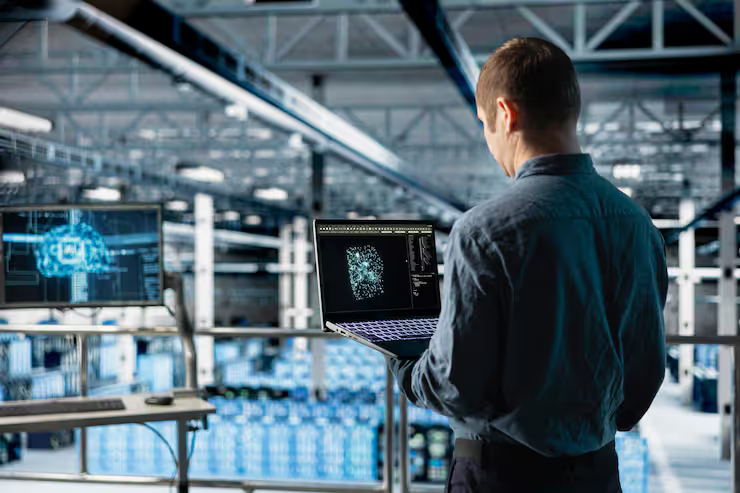
Industrial sensors play an important role in modern manufacturing, process control, and industrial automation. They help machines and control systems detect changes in physical conditions, including temperature, pressure, movement, vibration, liquid levels, and flow rates. By converting these conditions into measurable signals, sensors enable industrial equipment to operate with greater consistency and provide useful information for monitoring production processes.
As manufacturing facilities adopt smart technologies and connected equipment, industrial sensor systems are becoming increasingly important. They support automated production lines, equipment monitoring, quality inspection, energy management, and predictive maintenance. Understanding the different types of industrial sensors, their working principles, and their applications can help businesses, engineers, and students understand how modern industrial systems function.
What Are Industrial Sensors?
Industrial sensors are electronic or electromechanical devices that detect physical or chemical changes in an environment and convert them into signals that can be measured, displayed, recorded, or processed by another system. Depending on their design, these devices may detect contact, distance, heat, force, fluid movement, gas concentration, or other operating conditions.
In a manufacturing facility, a sensor may detect the position of a component on a conveyor belt, measure the temperature inside an industrial furnace, or monitor pressure in a hydraulic system. The information is transmitted to a controller, monitoring platform, or supervisory control system, which can use it to display operating conditions or initiate a predefined action.
Industrial sensors are designed for different operating environments. Some are used in clean production areas, while others must withstand dust, moisture, vibration, high temperatures, or exposure to chemicals. Selecting an appropriate sensor depends on the application, required measurement accuracy, environmental conditions, and compatibility with the control system.
Types of Industrial Sensors and Their Applications
Different industrial sensor types are designed to measure specific parameters. Some detect the presence of an object, while others provide continuous measurements of operating conditions. The most suitable option depends on the required measurement range, accuracy, installation environment, and industrial process.
1. Temperature Sensors
Temperature sensors measure heat levels in machinery, materials, liquids, gases, and surrounding environments. Common technologies include thermocouples, resistance temperature detectors (RTDs), and thermistors. Each type has different operating ranges, response characteristics, and accuracy requirements.
In industrial manufacturing, temperature sensors are used in furnaces, boilers, refrigeration systems, chemical processing equipment, and industrial HVAC systems. They help operators monitor thermal conditions, maintain consistent production parameters, and identify abnormal temperature changes that may affect equipment performance or product quality.
2. Pressure Sensors
Pressure sensors measure the pressure exerted by liquids or gases within a system. Depending on their design, they measure gauge pressure, absolute pressure, or differential pressure. These measurements are important in applications where pressure conditions must remain within specified operating limits.
Industrial pressure sensors are commonly used in hydraulic machinery, pneumatic equipment, pipelines, compressors, water treatment facilities, and chemical processing plants. Their measurements help control fluid movement, monitor process stability, and identify unusual pressure variations that may indicate a blockage, leakage, or equipment malfunction.
3. Proximity Sensors
Proximity sensors detect the presence or absence of an object without requiring direct physical contact in many common designs. Inductive proximity sensors are particularly useful for detecting metal objects, while capacitive sensors can detect a broader range of materials. Magnetic and photoelectric technologies are also used for object detection.
These sensors are widely used in conveyor systems, packaging machinery, robotic workstations, and automated assembly lines. For example, a proximity sensor can detect when a metal component reaches a particular position, allowing a programmable logic controller (PLC) to coordinate the next production step.
4. Photoelectric Sensors
Photoelectric sensors use light to detect objects, identify their position, or monitor movement. Depending on the design, they detect light reflected from a target or measure whether an object interrupts a light beam between the sensor and its receiver.
Industrial applications include product counting, packaging inspection, conveyor monitoring, and automated material handling. These sensors are useful when objects must be detected quickly or when contact with the product could interfere with the production process. Their performance can depend on the target's surface, color, transparency, and surrounding lighting conditions.
5. Flow Sensors
Flow sensors measure the movement of liquids or gases through pipes, channels, and process equipment. Common technologies include electromagnetic, ultrasonic, turbine, thermal, and Coriolis-based measurement systems. Each technology has different requirements depending on the fluid's properties and the measurement objective.
Flow measurement is important in water treatment, chemical manufacturing, cooling systems, food processing, and energy production. It allows operators to monitor fluid distribution, verify process conditions, and identify unexpected changes in flow that may affect production consistency.
6. Level Sensors
Level sensors measure or detect the amount of liquid or solid material inside tanks, containers, and storage vessels. Some designs provide a simple indication that a material has reached a particular level, while others continuously estimate the distance to the material surface.
Common technologies include float-based, capacitive, ultrasonic, radar, and hydrostatic level measurement. Industrial level sensors are used in water storage, wastewater treatment, chemical processing, fuel storage, and bulk material handling. Correct sensor selection depends on factors such as tank geometry, material properties, foam, dust, and operating conditions.
7. Vibration Sensors
Vibration sensors measure oscillations or mechanical movement in rotating and moving equipment. Accelerometers are frequently used to collect vibration data from motors, pumps, fans, compressors, gearboxes, and industrial machinery.
Changes in vibration patterns can provide useful information about equipment condition. For example, unusual vibration may be associated with bearing wear, imbalance, misalignment, or loosened mechanical components. When vibration measurements are combined with maintenance records and other operating data, they can support condition monitoring and predictive maintenance programs.
8. Position and Displacement Sensors
Position sensors determine the location or movement of a machine component, while displacement sensors measure changes in its position. Technologies include rotary encoders, linear encoders, linear variable differential transformers (LVDTs), magnetic sensors, and laser-based measurement devices.
These sensors are important in CNC machines, industrial robotics, automated inspection equipment, and motion control systems. They provide feedback about the position of moving components, helping controllers coordinate movement and maintain the required positioning accuracy during production.
9. Humidity Sensors
Humidity sensors measure moisture in the air or other gases. In industrial environments, humidity can affect material properties, storage conditions, product quality, and the performance of sensitive electronic equipment.
Applications include pharmaceutical manufacturing, electronics production, warehouses, food processing, and cleanrooms. Humidity measurements may be combined with temperature monitoring to maintain environmental conditions within a defined operating range.
10. Gas Sensors
Gas sensors detect particular gases or measure their concentration in an environment. Depending on the application, they may use electrochemical, infrared, catalytic, semiconductor, or other sensing technologies.
Industrial facilities use gas sensors for process monitoring, environmental measurement, and gas-leak detection. Their applications include chemical plants, industrial refrigeration, wastewater treatment, and energy facilities. The sensor must be appropriate for the target gas, expected concentration range, environmental conditions, and applicable safety requirements.
11. Force and Load Sensors
Force sensors measure the force applied to an object, while load cells are commonly used to measure weight or mechanical load. These devices may use strain gauges or other sensing technologies to convert mechanical deformation into an electrical signal.
In industrial settings, force and load sensors are used in weighing systems, material testing equipment, robotic grippers, assembly machinery, and production quality control. They help measure applied forces, verify material weights, and monitor loads during manufacturing operations.
12. Optical and Vision Sensors
Optical sensors detect light-related changes, while industrial vision sensors use cameras and image-processing capabilities to evaluate objects or features. Depending on the system, they may identify shapes, inspect surface defects, verify component orientation, or read printed codes.
These technologies are used in automated quality inspection, electronics manufacturing, pharmaceutical packaging, and component identification. Their performance depends on image resolution, lighting, lens selection, processing capability, and the characteristics of the object being inspected.
How Do Industrial Sensors Work?
Industrial sensors generally follow a process of detection, signal conversion, and data transmission. The sensing element responds to a physical condition, such as temperature, pressure, movement, or light. The device then converts that response into an electrical signal or digital output that another system can interpret.
The signal may pass through electronic circuitry that filters noise, amplifies the measurement, or converts it into a suitable format. The resulting data can be sent to a PLC, industrial computer, human-machine interface (HMI), or supervisory control and data acquisition (SCADA) system. Operators can then observe the measurements, while automated controllers can use the information to adjust equipment or initiate programmed responses.
For example, a temperature sensor installed in an industrial oven measures the internal temperature. Its output is transmitted to a controller, which compares the measurement with the required setpoint. Depending on the control configuration, the system can adjust the heating process to maintain the intended temperature.
Industrial sensors may provide discrete or continuous measurements. A discrete sensor typically reports a state such as on or off, detected or not detected. An analog sensor provides a continuously varying signal, while a digital sensor may transmit measurement values or diagnostic information through a communication interface.
Industrial Sensors in Automation and Smart Manufacturing
Industrial Automation Systems
Industrial automation relies on sensor feedback to coordinate machinery and production processes. Sensors detect component positions, monitor operating conditions, and provide information to control systems. This feedback allows automated equipment to perform repetitive operations with consistent timing and reduces the need for manual intervention in routine tasks.
Predictive Maintenance
Predictive maintenance uses information about equipment condition to help identify potential problems before they lead to unexpected failures. Vibration, temperature, pressure, and electrical measurements can provide useful indicators of changing machine performance.
Sensor data is more effective when analyzed alongside operating history, maintenance records, and appropriate diagnostic methods. A single unusual measurement does not necessarily confirm that a component is failing, but a persistent or changing pattern may justify further inspection.
Industrial Internet of Things (IIoT)
The Industrial Internet of Things connects industrial equipment, sensors, controllers, and software platforms so that operational information can be collected and analyzed. Connected sensors may transmit data through industrial networks or wireless communication systems to monitoring applications and analytics platforms.
IIoT applications include remote equipment monitoring, energy-use analysis, production tracking, and condition-based maintenance. Their effectiveness depends on reliable connectivity, suitable data quality, cybersecurity controls, and integration with existing industrial systems.
Quality Control and Process Monitoring
Industrial sensors help manufacturers monitor production variables and identify deviations from established specifications. Temperature, pressure, position, force, and vision measurements can be used to assess whether a process is operating within its defined limits.
When sensor readings are integrated into a quality management system, they can support production records, traceability, and analysis of recurring defects. However, measurement accuracy and appropriate calibration are essential when sensor data is used for quality decisions.
Benefits of Industrial Sensors
Industrial sensors provide valuable information that helps manufacturing and process industries manage equipment and production activities. Their benefits depend on the measurement technology, installation quality, and how the collected data is used.
Improved Operational Efficiency
Sensors provide real-time information about production conditions, allowing control systems to respond to changes in temperature, pressure, flow, and machine position. This information can help maintain consistent process conditions and identify inefficiencies that might otherwise remain unnoticed.
Enhanced Equipment Monitoring
Continuous measurement allows operators to observe equipment behavior during operation. Temperature and vibration sensors, for example, can reveal changes that may require maintenance attention. When combined with appropriate diagnostic procedures, this information can support more informed maintenance planning.
Consistent Product Quality
Sensor-based monitoring helps manufacturers maintain repeatable process conditions. Position sensors can verify component alignment, while temperature sensors monitor heating processes and vision sensors inspect product features. These measurements support quality assurance when used with defined inspection criteria.
Better Energy and Resource Management
Sensors can measure energy consumption, fluid flow, pressure, and environmental conditions. Analyzing these measurements can help identify unnecessary energy use, inefficient equipment operation, and variations in resource consumption across production processes.
Data-Driven Decision-Making
Industrial sensor data can provide a factual basis for evaluating production performance, equipment condition, and process stability. When historical measurements are available, engineers can compare operating periods, investigate recurring variations, and identify areas for improvement.
How to Choose the Right Industrial Sensor
Selecting an industrial sensor requires an understanding of the measurement objective and the conditions in which the device will operate.
Define the Measurement Requirement
The first step is to identify the physical parameter that needs to be measured. Temperature monitoring requires a different technology from liquid-level detection or machine-position measurement. It is also important to determine whether the application needs a simple detection signal or a continuous measurement.
Check Accuracy and Measurement Range
Sensor specifications should match the expected operating range and the required level of precision. Important characteristics include accuracy, resolution, repeatability, response time, and measurement stability. A sensor with a wide measurement range may not always provide the precision required for a particular application.
Evaluate the Industrial Environment
Environmental conditions can influence sensor performance. High temperatures, humidity, dust, vibration, chemicals, and electromagnetic interference may affect the device or its signal. Engineers should evaluate the enclosure rating, material compatibility, operating temperature range, and any applicable hazardous-area certifications.
Review Output Signals and Connectivity
The sensor output must be compatible with the control system. Common industrial interfaces include switching outputs, analog voltage, current loops such as 4–20 mA, and digital communication protocols. Connected manufacturing systems may also require support for industrial networking or IO-Link.
Consider Calibration and Maintenance
Sensor performance may change over time because of wear, environmental exposure, or measurement drift. The maintenance plan should account for calibration requirements, diagnostic features, accessibility, and the consequences of inaccurate readings.
Comparison of Common Industrial Sensors
The following table summarizes typical sensor applications and key selection considerations.
Sensor type | Main measurement | Common application |
|---|---|---|
Temperature | Thermal conditions | Furnaces and industrial HVAC |
Pressure | Fluid or gas pressure | Hydraulic systems and pipelines |
Proximity | Object presence | Assembly lines and conveyors |
Photoelectric | Object detection using light | Packaging and product counting |
Flow | Liquid or gas movement | Water treatment and process control |
Level | Material height or presence | Tanks and storage vessels |
Vibration | Mechanical oscillation | Motors and rotating machinery |
Position | Location or displacement | CNC machines and robotics |
Humidity | Moisture in air | Cleanrooms and storage facilities |
Gas | Gas presence or concentration | Process monitoring and leak detection |
Force and load | Applied force or weight | Weighing and material testing |
Vision | Visual features and defects | Automated quality inspection |
Challenges and Limitations of Industrial Sensors
Although industrial sensors provide important measurement capabilities, they also have limitations that must be considered during system design.
Environmental interference can affect measurement accuracy. Dust, moisture, vibration, electrical noise, and temperature changes may influence readings or shorten sensor service life if the device is unsuitable for the installation environment.
Calibration and measurement drift can create inaccurate readings over time. Periodic verification and maintenance are important, particularly when measurements influence product quality or critical operating decisions.
Integration complexity may arise when sensors use different output formats, communication protocols, or control-system architectures. Compatibility should be evaluated before installation.
Data quality and cybersecurity are additional considerations for connected industrial sensors. Incorrect readings, network interruptions, unauthorized access, or poorly configured systems can affect the reliability and security of industrial monitoring.
Installation and positioning also matter. Incorrect mounting, unsuitable sensing distance, poor alignment, or improper process connections can reduce measurement reliability even when the sensor itself meets its specifications.
Future Trends in Industrial Sensor Technology
Smart Sensors and Embedded Diagnostics
Smart sensors increasingly combine measurement capabilities with processing, communication, and diagnostic functions. Depending on the device, these features can provide information about sensor status, measurement quality, and operating conditions, helping technicians identify problems more efficiently.
Wireless Industrial Monitoring
Wireless sensors can simplify monitoring in locations where conventional wiring is difficult or impractical. They are used in applications such as equipment condition monitoring, environmental measurement, and remote asset supervision. Battery life, communication reliability, cybersecurity, and network coverage remain important design considerations.
AI-Assisted Sensor Analytics
Artificial intelligence and machine learning can analyze large volumes of sensor data to identify patterns, detect unusual operating behavior, and support maintenance planning. Their usefulness depends on reliable measurements, appropriate models, representative data, and human oversight. Automated analysis should not be treated as a substitute for required engineering checks or safety systems.
Integration with Digital Twins
A digital twin is a digital representation of a physical asset, process, or system. Industrial sensor measurements can help update this representation with information about actual operating conditions. When combined with suitable engineering models, the data can support performance analysis, simulation, and maintenance planning.
These developments are contributing to more connected industrial environments in which sensor measurements are used alongside automation, analytics, and asset management systems.
Frequently Asked Questions About Industrial Sensors
What are industrial sensors used for?
Industrial sensors measure or detect conditions such as temperature, pressure, flow, position, vibration, humidity, and gas concentration. Their data supports industrial automation, equipment monitoring, process control, quality inspection, and maintenance planning.
What are the most common types of industrial sensors?
Common types include temperature sensors, pressure sensors, proximity sensors, photoelectric sensors, flow sensors, level sensors, vibration sensors, position sensors, humidity sensors, and gas sensors. The appropriate type depends on the parameter being measured and the industrial application.
What is the difference between an industrial sensor and a transducer?
A sensor detects or measures a physical quantity. A transducer converts one form of energy or a physical quantity into another form of signal. In many industrial measurement devices, the sensing element and transducer functions are integrated into a single unit.
How do industrial sensors support predictive maintenance?
Industrial sensors collect information about equipment behavior, including vibration, temperature, and pressure. Analyzing changes in these measurements over time can help maintenance teams identify possible developing faults and determine when further inspection may be appropriate.
What is the role of industrial sensors in Industry 4.0?
Industrial sensors provide the measurement data used by connected machines, automation controllers, industrial networks, and analytics platforms. This information supports real-time monitoring, production analysis, process optimization, and condition-based maintenance in Industry 4.0 environments.
What factors affect industrial sensor accuracy?
Accuracy can be affected by calibration, temperature, vibration, electrical interference, sensor positioning, installation conditions, material properties, and measurement range. Following the manufacturer's technical specifications and maintenance recommendations helps maintain reliable measurements.
Conclusion
Industrial sensors are fundamental components of modern manufacturing, industrial automation, and process control. They measure physical conditions and provide information that helps machines, controllers, and operators monitor production activities and equipment performance.
From temperature and pressure measurement to machine vision and vibration analysis, each sensor type serves a specific purpose. Choosing the right industrial sensor requires consideration of accuracy, operating conditions, signal compatibility, calibration, and maintenance requirements.
As smart manufacturing, the Industrial Internet of Things, and data-driven maintenance continue to develop, industrial sensors will remain an important part of connected production systems. Understanding their working principles and applications provides a useful foundation for evaluating industrial measurement and automation technologies.