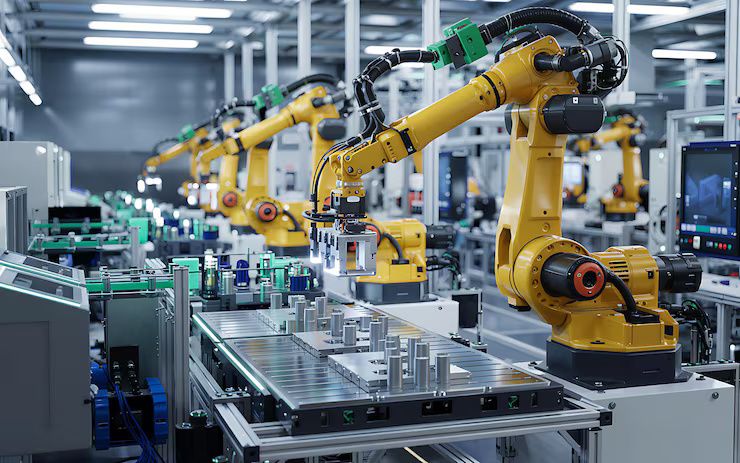
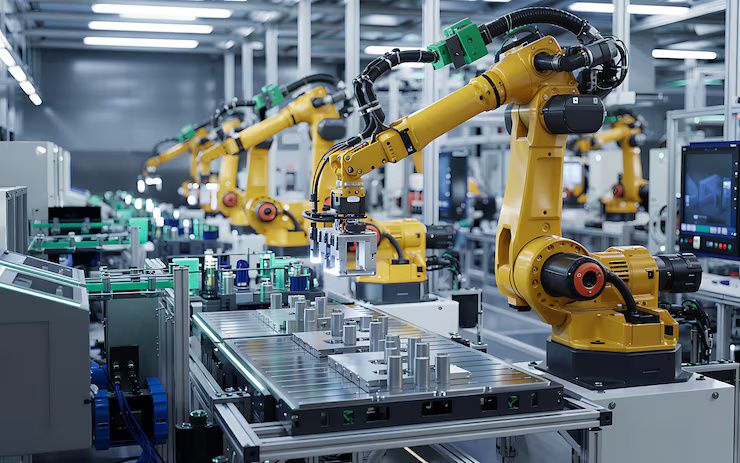
Automation equipment manufacturing is the industrial process of designing, engineering, producing, and assembling machines and systems that perform tasks automatically with minimal human intervention. These systems include robotic arms, conveyor automation, control panels, sensors, programmable logic controllers (PLCs), automated assembly machines, and smart manufacturing equipment used across modern industries.
Automation equipment exists to improve productivity, accuracy, and operational efficiency while reducing manual labor and production errors. As industries adopt Industry 4.0 and smart factory concepts, automation manufacturing has become a core part of global industrial development.
Context: What Automation Equipment Manufacturing Is and Why It Exists
Traditional manufacturing relied heavily on manual labor and mechanical operations, which limited production speed and consistency. With growing demand for high-volume production and precision manufacturing, automated systems were developed to perform repetitive and complex tasks more efficiently.
Automation equipment manufacturing exists to:
-
Increase production efficiency and output
-
Improve precision and product consistency
-
Reduce human error and workplace risks
-
Enable 24/7 production capability
-
Support digital transformation in industries
Modern automation equipment combines mechanical engineering, electronics, software programming, sensors, and data analytics to create intelligent production systems.
Importance: Why Automation Equipment Matters Today
Automation equipment is essential for modern industrial competitiveness and scalability.
Key Reasons Automation Equipment Manufacturing Is Important
1. Production Efficiency Improvement
Reduces cycle times and increases throughput.
2. Labor Optimization
Automates repetitive and hazardous tasks.
3. Higher Product Quality
Maintains consistent process accuracy.
4. Operational Cost Control
Reduces long-term manufacturing expenses.
5. Smart Factory Integration
Supports digital manufacturing environments.
This topic is relevant to manufacturing engineers, plant managers, system integrators, industrial designers, EPC contractors, and automation technology providers.
Recent Updates: Automation Equipment Trends (2024–2025)
Automation technology continues evolving with digital and AI-driven innovations.
1. AI-Based Automation Systems
Predictive operation and adaptive control.
2. Collaborative Robots (Cobots)
Safe human-machine collaboration.
3. IoT-Connected Equipment
Real-time monitoring and analytics.
4. Digital Twin Manufacturing
Virtual testing before deployment.
5. Energy-Efficient Automation Systems
Reduced power consumption.
6. Modular Automation Equipment
Flexible production line configurations.
Laws & Policies Affecting Automation Equipment Manufacturing
Automation systems must comply with industrial machinery and safety regulations.
Key considerations include:
-
Machine safety and operational standards
-
Electrical and control system regulations
-
Worker safety and guarding requirements
-
Cybersecurity guidelines for connected equipment
-
Environmental and energy efficiency regulations
Compliance ensures safe and reliable operation in industrial environments.
Automation Equipment Manufacturing Process
Automation equipment production follows a structured engineering process.
-
Requirement analysis and feasibility study
-
Mechanical and electrical design engineering
-
Software and control system development
-
Component sourcing and procurement
-
Fabrication and machining
-
Assembly and wiring integration
-
Programming and system configuration
-
Testing and performance validation
-
Quality inspection and certification
-
Installation and commissioning at site
Each stage ensures equipment reliability and process compatibility.
Core Technologies Used in Automation Equipment
Automation systems rely on multiple advanced technologies.
Programmable Logic Controllers (PLCs)
Control machine sequences and logic.
Industrial Robotics
Perform precise repetitive tasks.
Sensors and Vision Systems
Monitor position, quality, and movement.
Servo Motors and Drives
Provide accurate motion control.
Human Machine Interfaces (HMI)
Enable operator control and monitoring.
Industrial IoT Connectivity
Collect and analyze production data.
SCADA Systems
Centralized system supervision and control.
Main Components of Automation Equipment
Automation machinery includes several integrated components.
Mechanical Structures
Frames, conveyors, and tooling systems.
Electrical Panels
Power distribution and control units.
Actuators and Motors
Convert electrical signals into motion.
Sensors and Safety Devices
Detect conditions and prevent hazards.
Control Software
Programs machine behavior.
Communication Modules
Connect systems to factory networks.
Automation Equipment Types and Industrial Applications
| Equipment Type | Primary Function | Industrial Application |
|---|---|---|
| Robotic Systems | Automated handling | Automotive manufacturing |
| Conveyor Automation | Material transport | Packaging & logistics |
| Assembly Automation | Product assembly | Electronics industry |
| Inspection Systems | Quality control | Pharmaceutical production |
| Packaging Automation | Product packaging | Food & beverage sector |
Industrial Applications of Automation Equipment
Automation equipment supports numerous industries.
1. Automotive Manufacturing
Robotic welding and assembly lines.
2. Electronics Production
Precision assembly and testing.
3. Food and Beverage Processing
Automated packaging and sorting.
4. Pharmaceutical Industry
Sterile production and inspection.
5. Logistics and Warehousing
Automated sorting and conveyor systems.
6. Chemical Processing
Controlled reaction and mixing systems.
7. Metal Fabrication
CNC and robotic handling systems.
Benefits of Automation Equipment Manufacturing
Higher Productivity
Continuous operation with minimal downtime.
Improved Safety
Reduces human exposure to hazardous processes.
Consistent Quality
Precision-controlled manufacturing.
Lower Operational Costs
Reduced labor dependency.
Scalable Production
Easy expansion of manufacturing lines.
Challenges & Considerations
-
High initial investment costs
-
Complex integration with existing systems
-
Skilled workforce requirement
-
Maintenance and software updates
-
Cybersecurity risks in connected systems
Proper planning ensures successful implementation.
How to Choose the Right Automation Equipment
Define Production Goals
Automation level required.
Evaluate Process Complexity
Single-task or multi-function equipment.
Assess Scalability
Future expansion capability.
Check Technology Compatibility
Integration with existing systems.
Review Safety Standards
Machine guarding and compliance.
Ensure After-Sales Support
Technical maintenance and training.
Maintenance & Best Practices
-
Regular software updates
-
Sensor calibration and inspection
-
Mechanical lubrication and wear monitoring
-
Electrical panel inspections
-
Predictive maintenance using data analytics
-
Operator training programs
Preventive maintenance ensures long-term reliability.
Frequently Asked Questions
1. What is automation equipment manufacturing?
It is the production of machines designed to automate industrial tasks.
2. Which industries use automation equipment the most?
Automotive, electronics, food processing, and logistics.
3. Does automation reduce labor completely?
No, it shifts labor toward skilled technical roles.
4. Can automation equipment be customized?
Yes, systems are often designed for specific production needs.
5. How long does automation equipment last?
Typically 15–25 years with proper maintenance.
Conclusion
Automation equipment manufacturing plays a central role in modern industrial progress by enabling faster, safer, and more efficient production processes. Through advanced technologies such as robotics, sensors, and intelligent control systems, automation solutions help industries meet growing production demands while maintaining high quality and operational efficiency.
Understanding manufacturing processes, technologies, components, applications, and maintenance practices allows businesses to invest in effective automation strategies. As Industry 4.0 continues to reshape global manufacturing, automation equipment will remain essential for smart factories and future-ready industrial operations.